Laser Surface Engineering of Ti6Al4V Alloy: Advanced Surface Structuring of Biomedical Implants

Authors: dr. Rodič Peter, Jožef Stefan Institute; dr. Ingrid Milošev, Jožef Stefan Institute and Valdoltra Orthopedic Hospital; Bajrami Alena, BSc.Met. Engineer, FerroEcoBlast; Malnarič Darko, BSc. Mech. Engineer, FerroEcoBlast
The Ti6Al4V alloy (also known as Grade 5 alpha-beta titanium alloy, composed of 90% titanium, 6% aluminium, and 4% vanadium) is often used for orthopaedic implants, dental implants, and other medical devices requiring high durability and reliability within the human body.[1] Its biocompatibility is mainly due to forming of a stable titanium oxide layer on its surface,[2] which minimizes the risk of adverse reactions when implanted. Additionally, the alloy's mechanical properties, such as a high strength-to-weight ratio, make it suitable for load-bearing implants where long-term performance is required.[1]
Importance of Surface Structuring
Surface structuring of Ti6Al4V is crucial for improving its interaction with biological tissues. The surface topography of an implant can significantly influence cell adhesion, which is essential for successful osseointegration into the bone.[3] Surface structuring also plays a vital role in enhancing the alloy's wear and corrosion resistance, which are critical for the longevity and performance of the implant. Modifying the surface at the micro- or nano-scale makes it possible to tailor the surface properties to promote better biological responses, reduce the risk of implant failure, and ultimately improve patient outcomes.
In order to achieve well-defined surface structuring, various strategies have been employed to modify the surface of Ti6Al4V, including mechanical, chemical, and physical methods. Mechanical methods such as grit (sand) blasting and machining are commonly used to create rough surfaces that promote bone growth. Chemical treatments, including acid etching and anodization, can alter the surface chemistry and roughness, enhancing the material's bioactivity. Physical methods, such as plasma spraying and physical vapour deposition, are used to coat the surface with bioactive materials like hydroxyapatite, which can improve osseointegration.[3] However, these methods have limitations regarding precision, control over surface features, and the potential introduction of contaminants.
Laser Structuring of Ti6Al4V
Laser structuring has emerged as a highly effective technique for modifying the surface of Ti6Al4V. This method uses a focused laser beam to precisely ablate material from the surface, creating micro- and nano-scale features.[4,5] The main advantages of laser structuring include its ability to produce complex surface patterns with high precision and minimal thermal damage to the underlying material. The scheme of the laser surface structuring is presented in Fig. 1. Furthermore, laser structuring can be performed in a controlled environment (atmosphere), reducing the risk of contamination during ablation on the metal. This technique also offers the flexibility to create a wide range of surface topographies, from simple grooves to more complex patterns under selected parameters of laser power, laser beam diameter, point distance, and hatch spacing, which can be optimized for different biomedical applications.

Figure 1. A scheme of laser ablation of the metal surface such as Ti6Al4V.
Laser structuring offers several benefits over traditional surface modification techniques.[4,5] In terms of cost, while the initial investment in laser equipment can be high, the overall cost per part can be lower due to eliminating additional processing steps and reducing material waste. Laser processing speed is another significant advantage, as it rapidly produces complex surface features in a single step. Figure 2 presents the industrial 3D fibre laser that can structure and clean several metal surfaces.
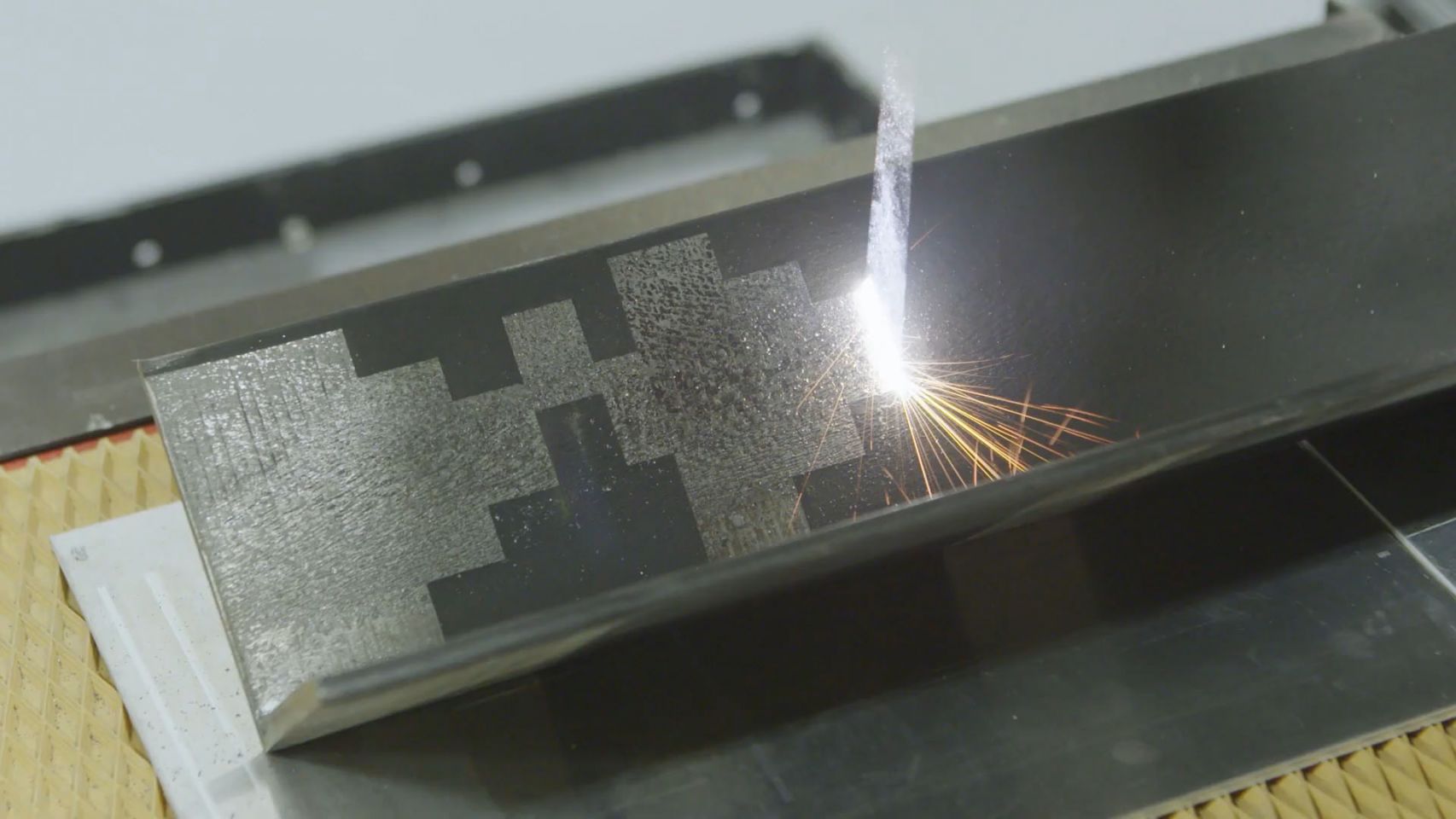
Figure 2. 3D fiber laser located at FerroECOBlast Slovenia, (https://ferroecoblast.com/laser) used for surface structuring of various metal surfaces.
From an environmental perspective, laser structuring is a more acceptable process than chemical methods, as it does not require harmful chemicals and produces minimal waste. However, some limitations include the need for precise control of processing parameters to avoid thermal damage and the potential for surface oxidation, which may require additional passivation treatments.
The Effect of Laser Structuring of Ti6Al4V on Surface Properties
Laser structuring significantly impacts the surface properties (surface topography and composition) of Ti6Al4V, which are critical for its performance in biomedical applications. The laser treatment was performed under a constant frequency of 500 kHz, scanning speed of 10 000 mm/sec, hatch distance 0.06 mm, with the distance between dots 0.02 mm, but with two different pulse durations of 30 and 120 ns. In order to demonstrate the effect of laser structuring and different pulse duration, surface topography and composition analysis were performed using scanning electron microscopy (SEM) coupled with energy-dispersive X-ray spectroscopy (EDS), Figure 3.

Figure 3. Imaging of surface appearance using a scanning electron microscope. Figure a) presents ground Ti6Al4V and b) laser-structured Ti6Al4V with a pulse duration of 30 s and c) with a pulse duration of 120 ns. The white square denote the analyzed area with EDS. The numbers in images and compared in Fig. d represent the composition given in weight percentage (wt. %).
Figure 3a shows SEM image of the TiAlV surface with several scratches that remained after mechanical grinding of the alloy surface. In contrast, Figures 3b and 3c depict a significantly altered surface topography resulting from laser structuring. The scratches were eliminated entirely, and a well-defined 3D rough structure was formed, particularly in Figure 3b. This observation confirms that uniform surface structuring can be achieved and is controllable by adjusting the laser parameters.
Additionally, the laser treatment also influences the surface composition. On the ground Ti6Al4V alloy, the analyzed composition corresponds closely to the bulk metal composition, with the presence of oxygen indicating surface passivation. However, the surface composition of the laser-textured samples shows significant differences, Figures 3b,c,d. Notably, vanadium was not detected on the laser-textured surfaces, while the oxygen content was significantly greater (O = 17.1 and 12.8 wt. %). This can be attributed to laser ablation, which promotes surface passivation by forming aluminium and titanium oxides (vanadium remains in bulk material and under oxide film). Moreover, nitrogen from the atmosphere was incorporated into the passive film during laser processing (N = 1.9 and 1.2 wt. %), likely leading to titanium nitride (TiN) formation, which provides additional protection to the alloy surface. Based on the obtained EDS data, the difference in composition is also related to selected laser parameters. More O and more N in the newly formed passive film were detected on the treated surface with a shorter pulse duration (30 ns).
It can be assumed that laser structuring can also increase surface hardness by inducing localized phase transformations and the formation of nitride , which enhances the wear resistance of the implant.[5] The process can also improve surface passivation, reducing the alloy's susceptibility to corrosion in the physiological environment.[6] Furthermore, laser structuring can enhance the alloy's corrosion resistance by creating a uniform and stable (thicker) oxide layer. Finally, by optimizing the surface topography, laser structuring can improve osseointegration, leading to faster healing times and more stable implant integration.
Summary
The future of laser structuring in medical implants is promising surface structuring, with ongoing advancements in laser technology and process optimization. As the demand for personalized and highly functional implants grows, laser structuring offers a versatile and efficient solution for tailoring surface properties to meet specific clinical needs. Future developments may include the integration of laser structuring with other additive manufacturing techniques, enabling the production of fully customized implants with optimized surface features. Additionally, exploring new laser processing techniques, such as femtosecond laser ablation, could further enhance the precision and control of surface structuring, leading to even better clinical outcomes for patients.
References:
1. Leo Kumar, S.P.; Avinash, D. Review on Effect of Ti-Alloy Processing Techniques on Surface-Integrity for Biomedical Application. Mater. Manuf. Process. 2020, 35, 869–892, doi:10.1080/10426914.2020.1748195.
2. Milošev, I.; Metikoš-Huković, M.; Strehblow, H.-H. Passive Film on Orthopaedic TiAlV Alloy Formed in Physiological Solution Investigated by X-Ray Photoelectron Spectroscopy. Biomaterials 2000, 21, 2103–2113, doi:10.1016/S0142-9612(00)00145-9.
3. Liu, Y.; Rath, B.; Tingart, M.; Eschweiler, J. Role of Implants Surface Modification in Osseointegration: A Systematic Review. J. Biomed. Mater. Res. A 2020, 108, 470–484, doi:10.1002/jbm.a.36829.
4. Martínez-Calderon, M.; Martín-Palma, R.J.; Rodríguez, A.; Gómez-Aranzadi, M.; García-Ruiz, J.P.; Olaizola, S.M.; Manso-Silván, M. Biomimetic Hierarchical Micro/Nano Texturing of TiAlV Alloys by Femtosecond Laser Processing for the Control of Cell Adhesion and Migration. Phys. Rev. Mater. 2020, 4, 056008, doi:10.1103/PhysRevMaterials.4.056008.
5. Stoian, R.; Colombier, J.-P. Advances in Ultrafast Laser Structuring of Materials at the Nanoscale. Nanophotonics 2020, 9, 4665–4688, doi:10.1515/nanoph-2020-0310.
6. Madapana, D.; Bathe, R.; Manna, I.; Majumdar, J.D. Effect of Process Parameters on the Corrosion Kinetics and Mechanism of Nanosecond Laser Surface Structured Titanium Alloy (Ti6Al4V). Appl. Surf. Sci. Adv. 2024, 20, 100580, doi:10.1016/j.apsadv.2024.100580.
Acknowledgement
The surface characterisation using SEM/EDS was performed at Jožef Stefan Institute, Jamova cesta 39, 1000 Ljubljana, Slovenia, Department of Physical and Organic Chemistry - K3. Centre of Excellence in Nanoscience and Nanotechnology-Nanocenter, Ljubljana, Slovenia, is acknowledged for the use of the scientific equipment SEM/EDXS. The authors from Jožef Stefan Institute acknowledge the Slovenian Research and Innovation Agency (ARIS) for the funding of the project »Antibacterial alloys: Development by additive 3D manufacturing, characterisation and clinical applications«, acronym BIOAD, https://bioad.ijs.si/ (grant No. J7-4639).