The Rising Price of Smiles: Overcoming Inflation Challenges in Dental Implant Production
Author: Aljaž Molek
Inflation has become an uninvited guest in the dental implant industry, impacting each stage of the production process. With rising costs for raw materials, energy, and labour, manufacturers are facing increased expenses that are difficult to absorb without raising prices. As a result, dental implants, already considered a premium product, are becoming even more expensive, making it harder to stay competitive in the market. This creates a dilemma, as manufacturers must balance cost control with maintaining the quality of their products, while also ensuring the final price remains accessible for dental professionals and patients. To overcome these challenges, manufacturers are increasingly turning to innovative solutions like automation and efficiency improvements to manage costs and stay competitive.
The Rising Cost of Dental Implant Production
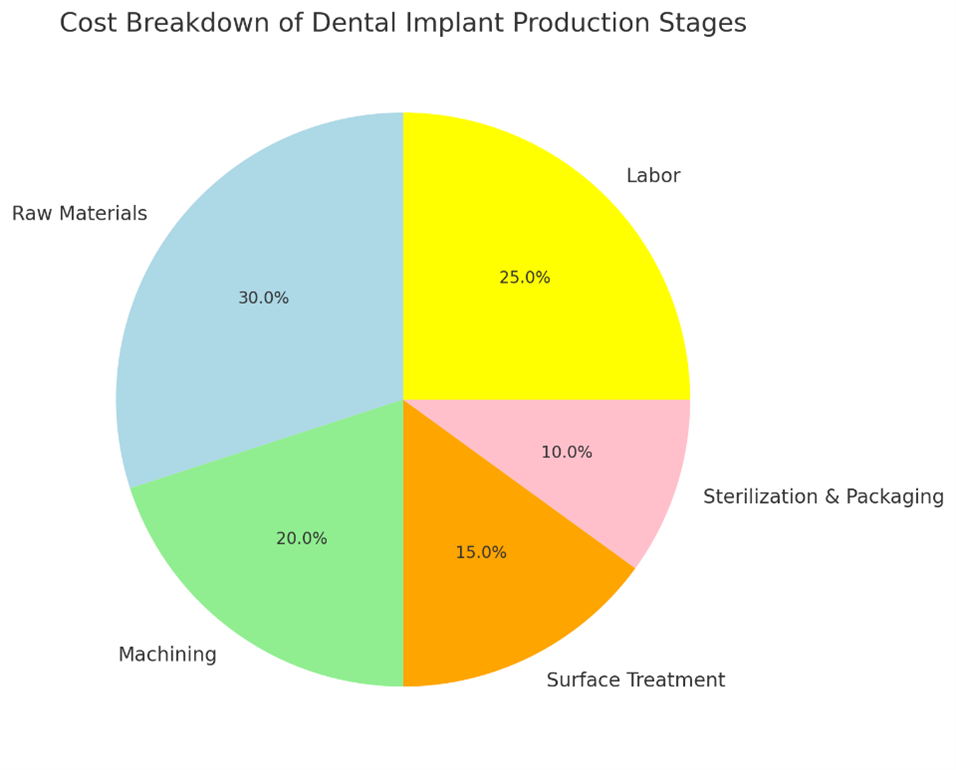
The production of dental implants is a complex, multi-step process that has been heavily affected by inflation. It starts with the procurement of essential raw materials like titanium and zirconia, both of which have seen significant price increases due to supply chain disruptions and rising global demand. Additionally, the energy required for machining and treating these materials, along with the costs of skilled labour, has escalated, adding pressure at every step of production.
Beyond raw materials, several crucial stages—such as surface treatment, cleaning, sterilizing, and packaging—have also become more expensive due to higher energy and labour costs. Each of these stages is essential for ensuring the safety, quality, and performance of the implants. For manufacturers, this means a constant struggle to keep costs under control while delivering the same high standards of product quality.
For dental professionals and patients, these rising costs translate to higher prices per implant, putting pressure on both clinics and patients. The challenge for manufacturers is finding ways to streamline production without compromising quality.
Strategies to Tackle Inflation in Implant Production
To tackle the rising costs, manufacturers are employing several strategies designed to boost efficiency and reduce the impact of inflation on their operations:
- Lean Manufacturing: One of the most effective methods for reducing costs is the adoption of lean manufacturing principles. By identifying and eliminating inefficiencies in the production process, manufacturers can reduce waste, optimize resource use, and streamline workflows, ultimately lowering production costs.
- Supply Chain Diversification: To manage the rising prices of raw materials, many manufacturers are diversifying their supply chains. By sourcing materials from multiple regions and suppliers, they can reduce their exposure to sudden price fluctuations and secure more stable pricing.
- Vertical Integration: Some manufacturers are turning to vertical integration, bringing more aspects of the production process in-house to reduce their reliance on third-party suppliers. By having greater control over the production pipeline, manufacturers can better manage costs at various stages.
- Automation and Advanced Technology: The most impactful way to combat inflation, however, is through the adoption of automation and advanced technology. Automating key production processes not only reduces labour costs but also increases efficiency, minimizes human error, and ensures consistency in product quality.
The Importance of Surface Treatment and Automation
Among the critical stages of dental implant production, surface treatment plays a pivotal role. Proper surface treatment ensures that implants achieve the necessary texture and properties for osseointegration—the process by which the implant bonds with bone tissue. Surface treatment methods such as blasting, acid etching, and coating are essential for creating a surface that promotes this biological integration.
Traditionally, surface treatment has been a labour-intensive and time-consuming process. However, with the rise of automation, manufacturers can now significantly reduce the time and labour required for these steps, while simultaneously improving precision and consistency.

Automated solutions, such as those provided by FerroECOBlast, demonstrate how technology can be leveraged to improve production efficiency. Their advanced blasting machines are designed to automate surface preparation processes for dental implants, which is a key step in ensuring implant quality with:
- Consistent and Precise Surface Preparation: Automation ensures that each implant receives the same high-quality surface treatment, reducing variability and errors that often come with manual processes.
- Lower Labor and Operational Costs: Automated systems reduce the need for manual labor, which becomes increasingly expensive as inflation pushes wages higher. This allows manufacturers to cut costs without compromising on quality.
- Increased Production Efficiency: Automated systems can handle larger volumes of implants in a shorter time frame, improving overall productivity. This allows manufacturers to meet demand without proportionally increasing costs.
- Energy Efficiency: As energy prices rise, the ability to reduce energy consumption becomes crucial. FerroECOBlast’s machines are designed to operate efficiently, reducing the energy required for surface treatment and contributing to overall cost savings.
Although surface treatment is a critical point where automation delivers substantial benefits, automating other processes, such as acid etching, cleaning, sterilizing, and packaging, also plays a crucial role in managing inflation-driven costs. Automation across these stages ensures a more streamlined, cost-effective production process while maintaining high standards of implant quality and safety.
Efficient Combination for Efficient Result
No single solution can fully address the challenges inflation presents to dental implant production. In conclusion, while inflation presents real challenges, a combination of innovation, efficiency, and smart supply chain management offers a path forward for the dental implant industry. Automated technologies, are an essential piece of the puzzle, helping manufacturers maintain high standards of production while keeping costs under control. By embracing these solutions, the industry can continue to thrive—even in the face of rising economic pressures.
DentalBlast Izdelki

DentalBlast 420 - Peskanje Zobnih Vsadkov
Natančna avtomatizacija za profesionalce v zobni industriji

DentalBlast 900 - Peskanje Zobnih Vsadkov
Avtomatizirana obdelava površin za visoko proizvodnjo zobnih vsadkov

Generator za peskanje in enota za recikliranje za zobne vsadke
Modularna reciklažna enota za abrazivni material, kjer je mogoče izbirati med različnimi možnostmi glede na zahteve stranke.